A republic side went up and nobody expected them to stay
Promotion in 2006 gave Nalchik something the city had never had: top-flight football. The question was always whether the budget would outlast the ambition.
From the First Division to the big league
Spartak Nalchik had spent most of their existence in the lower tiers of Soviet and then Russian football, a club from a republic capital of around 240,000 people that nobody outside Kabardino-Balkaria had much cause to follow. When they won promotion to the Russian Premier League for the 2006 season, the reaction across Russian football was mild curiosity rather than alarm. A club from Nalchik, a city tucked against the foothills of the Caucasus range with no history of top-flight competition, had qualified for the same division as CSKA Moscow and Zenit Saint Petersburg. The assumption was that they would spend a season proving a point and come back down.
They did not come back down. Not in 2006, not in 2007, not in the four seasons that followed. What Spartak Nalchik achieved in the Premier League between 2006 and 2011, before the money finally gave out ahead of 2012, was one of the more quietly extraordinary runs in modern Russian football — a side from a small-budget republic club competing week after week in a league where the gap between the top and the bottom was widening every season as oil money arrived at the bigger clubs.

The context mattered. Kabardino-Balkaria is one of the republics of the North Caucasus, a territory whose population includes Kabardians, a Circassian people whose language belongs to the Northwest Caucasian family, and Balkars, a Turkic-speaking people whose history carries the weight of the 1944 deportation — the forced removal of the entire Balkar population to Central Asia on Stalin’s orders, not reversed until 1957. Football in such a place carries identities and histories that no league table captures, and Spartak Nalchik’s rise meant something to the republic well beyond sport.
Six seasons, one peak, one slow departure
The first three Premier League seasons were about survival, and Nalchik survived them. They were compact, organised, and hard to beat at home, playing at Spartak Stadium — a ground that had been adequate for the first division but demanded real attention as a top-flight venue. The squad was never large and the wage bill never matched their rivals’, but the club made intelligent use of the winter break, the long pause in the Russian football calendar forced by climate, to rest and regroup rather than to spend.
Then came 2010. That season Spartak Nalchik finished sixth in the Premier League, a placing that startled the division and remains the club's best. It was not a fluke of schedule or a soft run of fixtures; they earned the points across a full campaign, finishing above clubs with budgets several times larger. Sixth place did not bring European qualification, but it put a city most European football followers could not have located on a map within sight of continental competition.
The regional dimension added texture to those six years. Alania Vladikavkaz had been the standard-bearer for North Caucasus football, having won the Russian title in 1995, and while Alania’s own fortunes were declining when Nalchik arrived in the Premier League, the proximity — Vladikavkaz is roughly 120 kilometres south-east of Nalchik — gave the fixture a weight beyond points. Anzhi Makhachkala and Terek Grozny completed what became a rough grouping of North Caucasus clubs, and when fixtures between them fell in the same season, they carried a regional charge that the clubs’ modest commercial profiles did not diminish.

Travel was its own story. Nalchik sits at the edge of the mountains, and away trips to Moscow or Saint Petersburg meant distances measured in serious hours and real cost. Reaching any club in the European part of Russia from a Caucasus base meant budget allocations that shaped how a club like Spartak could operate. Every away fixture had a price before a ball was kicked.
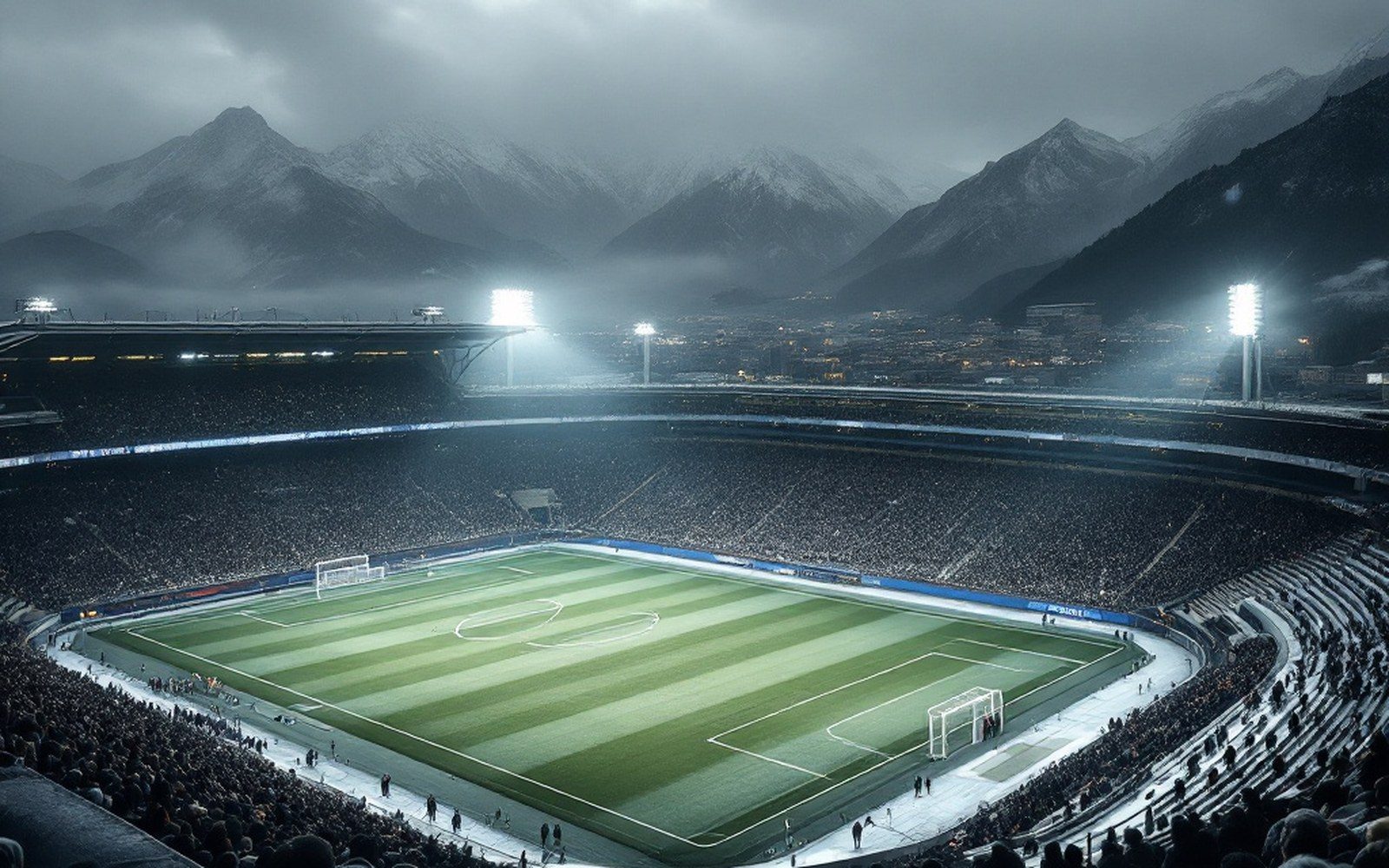
At home the club had the mountain backdrop and something genuinely unusual about the setting. The Caucasus range visible from the city, Mount Elbrus rising at 5,642 metres to the south-west, gave Nalchik a geography that no other Premier League club shared. None of that won points, but it made the club’s story legible to anyone paying attention: a small side in a republic capital, playing serious football against the Russian game’s wealthiest clubs, in sight of the highest mountain in Europe.
What finished it
The 2011–12 season ended in relegation, and by then the pattern was already clear. The funding that had sustained six seasons at the top level had not grown proportionally with the league’s own spending. The 2012 relegation followed the money rather than the football — or rather it followed the absence of money, which is the ordinary mechanism for a club like Nalchik once the initial push has run its course.
What Spartak Nalchik left behind was a six-season record in the Russian Premier League that included a genuine top-six finish. Clubs from far better-resourced cities and with far deeper commercial bases had not lasted as long in the top flight. The club did not collapse — they returned to the lower divisions and continued, as provincial clubs do — but the Premier League chapter closed with a clarity that made it feel like a completed thing rather than an interrupted one.
Russian football at the top level was changing around them throughout those years. The money at CSKA, Zenit and later Anzhi Makhachkala was redefining what staying up required. That Nalchik managed six seasons in that company, with one finish that would have satisfied clubs four times their size, is what the record shows. Nobody expected them to stay. They stayed anyway, for long enough to matter, and then the budget said enough.