A club that bought a squad and then stopped
When a Dagestani side briefly fielded a world-class roster, every regional fixture changed shape — including the one against Nalchik.
The money that changed a derby
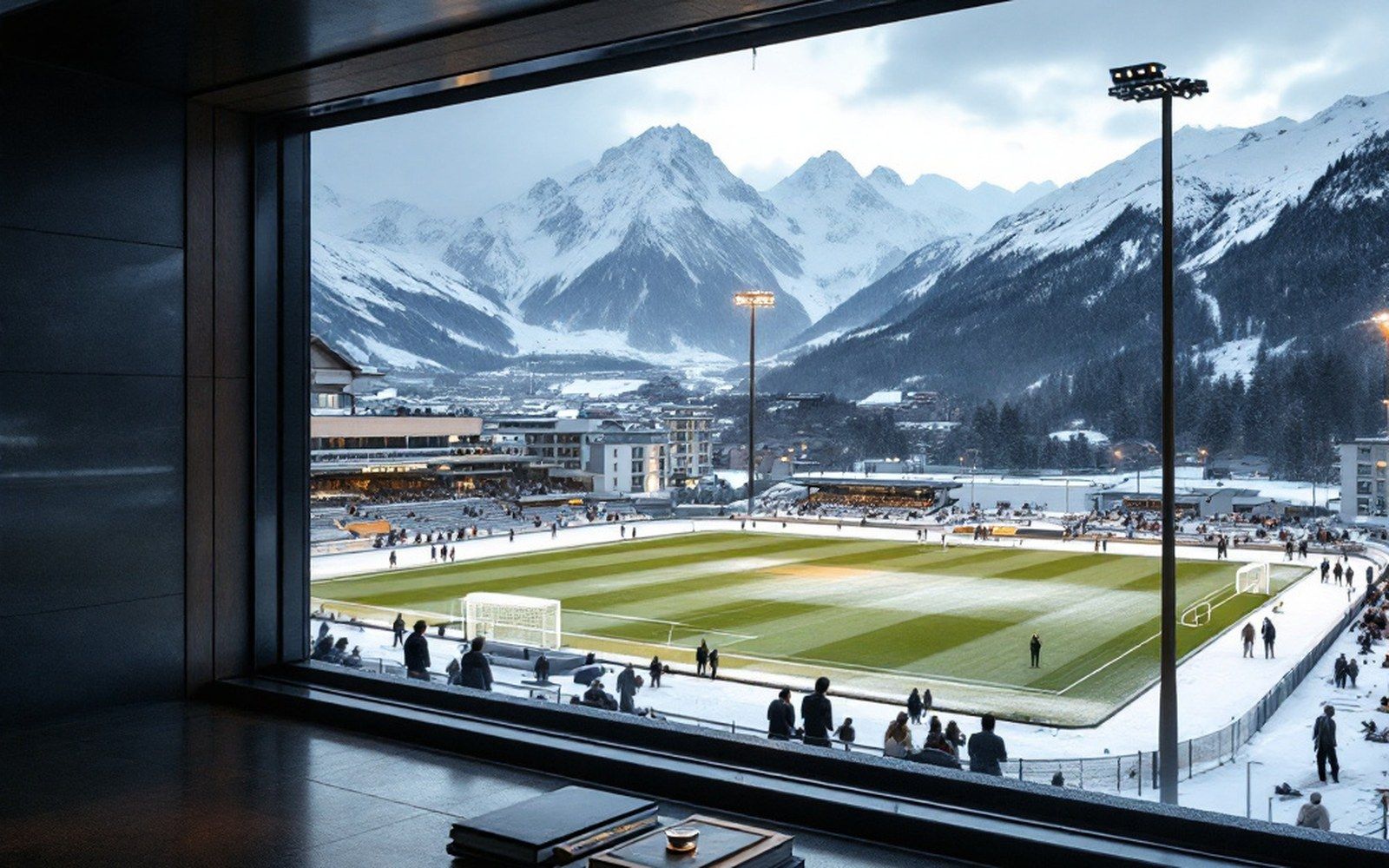
Anzhi Makhachkala had existed in Russian football’s middle tier for most of its history — competitive enough, regionally significant, never a force that commanded national attention. That changed in 2011 when the Dagestani billionaire Suleyman Kerimov bought the club and began spending at a scale that had no precedent in Russian football outside Moscow. The names that arrived were not fringe signings: Samuel Eto’o, then among the best-paid players in the world, joined from Inter Milan. Roberto Carlos came as a player and later a coach. Lassana Diarra, Willian, Christopher Samba — a squad assembled for a Champions League contender was based in Makhachkala, flying to training sessions in Moscow because the infrastructure in Dagestan could not support top-level preparation.
For clubs like Spartak Nalchik, the effect was immediate and strange. A regional fixture that had always carried a degree of parity — two modest clubs from the same broad geography — suddenly involved a side with a payroll that dwarfed entire league budgets. The match itself became something closer to an occasion than a contest, at least on paper, though Anzhi’s galáctico phase was operationally chaotic enough that form was never guaranteed.
Spartak Nalchik were in the Russian Premier League during exactly the years this transformation was happening. Their sixth-place finish in 2010 came before Kerimov’s investment reshaped the table; by 2011 and 2012, the league’s power structure had been redrawn. Anzhi finished fifth in 2012, then third in the 2012–13 season — their highest-ever league position — before the entire project collapsed mid-campaign with startling speed.
The collapse and what it left
In August 2013, Kerimov announced that the club’s budget would be cut dramatically and immediately. Players on extraordinary wages were released or sold within weeks. Eto’o left. Willian moved to Chelsea. The squad that had briefly threatened European competition dissolved faster than it had been assembled. Anzhi were relegated from the Premier League at the end of that season and spent subsequent years moving between divisions, eventually reaching the third tier of Russian football — a fall steeper, in its way, than anything Spartak Nalchik experienced.
The implosion confirmed something that observers of Russian regional football had suspected throughout the spending years: the investment had not built a club, it had rented one. There was no developed academy infrastructure, no local ownership culture, nothing that would outlast the billionaire’s interest. Makhachkala is a city of over half a million people on the Caspian coast — the capital of Dagestan, a republic with a different ethnic and linguistic composition from Kabardino-Balkaria but sharing its position as a place whose football clubs have operated at the margins of Russian top-flight viability.
For Nalchik, the Anzhi years illustrated, through contrast, what their own project had been: a sustainable, underfunded climb built on local identity and coaching discipline, not transferred wages. The two clubs’ trajectories crossed for a few seasons — both in the Premier League at the same time, both drawing whatever prestige came from appearing on the same fixture list as Eto’o — and then diverged completely. Nalchik went down in 2012 for reasons largely tied to budget constraints. Anzhi went down later, because the money stopped.
What the Anzhi episode added to the texture of North Caucasus football was a brief, vivid demonstration that the region could host elite-level football — and that hosting it and sustaining it were entirely different things. The regional fixture between two clubs from adjacent republics, which might reasonably have developed into something resembling a local derby with genuine competitive stakes, never quite became that. The spending years were too short, the structural collapse too total. By the time Anzhi were rebuilt at lower levels, Nalchik were no longer a Premier League side either, and the match that had briefly carried an unlikely glamour reverted to the lower divisions where both clubs were reassembled from whatever remained.
Reference
The material below is drawn from the same sources as the piece above, set out as a summary rather than as prose.