The highest mountain in Europe is in this republic
Kabardino-Balkaria’s southern border is defined by ice: Mount Elbrus at 5,642 metres, a dormant volcano that settles every argument about where Europe ends.
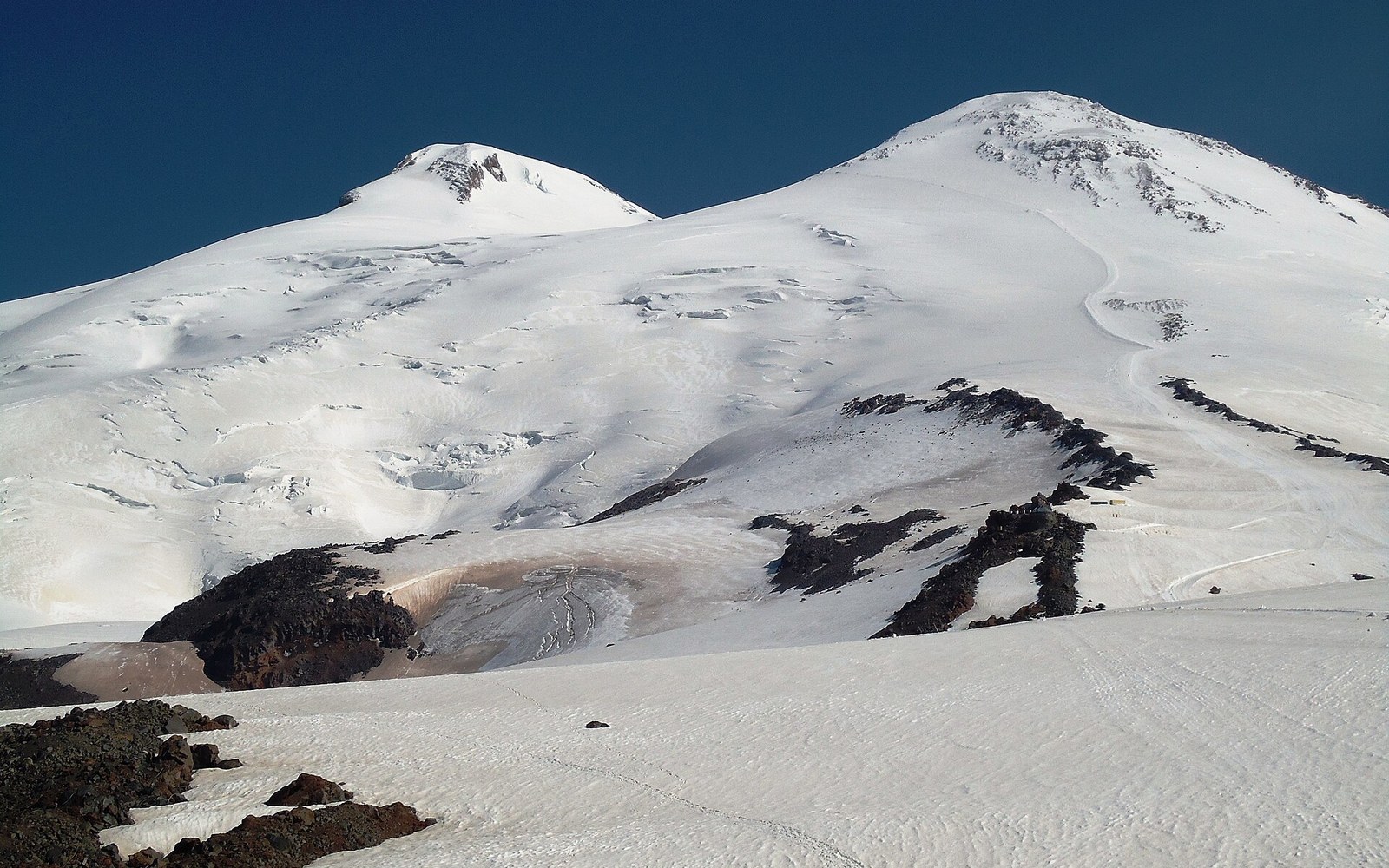
A republic shaped by altitude
Kabardino-Balkaria is small — roughly the size of Northern Ireland — but its southern edge touches a different world entirely. The Caucasus range runs along the republic’s border with Georgia, and at its western anchor sits Mount Elbrus, a dormant stratovolcano whose twin summits make it the highest point on the European continent by most accepted definitions. The western summit reaches 5,642 metres; the eastern, 5,621. Neither figure feels real from Nalchik, the capital, sitting at roughly 512 metres in the foothills to the north. But on a clear morning the mountain is visible from the city, a pale mass that appears to belong to a different atmosphere than the one you are standing in.
The republic takes a hyphenated name from its two main peoples: the Kabardians, a Circassian people speaking a Northwest Caucasian language, and the Balkars, a Turkic-speaking people of the high valleys whose documented history in these mountains stretches back centuries. The two communities came under Russian imperial administration during the nineteenth century and were combined into a single administrative unit during the Soviet period. The name reflects that combination, and so does the geography: broadly speaking, the Kabardian population is concentrated in the lower foothills and the plain around Nalchik, while the Balkar villages run up the mountain valleys to the south — including the valley that leads directly to Elbrus.
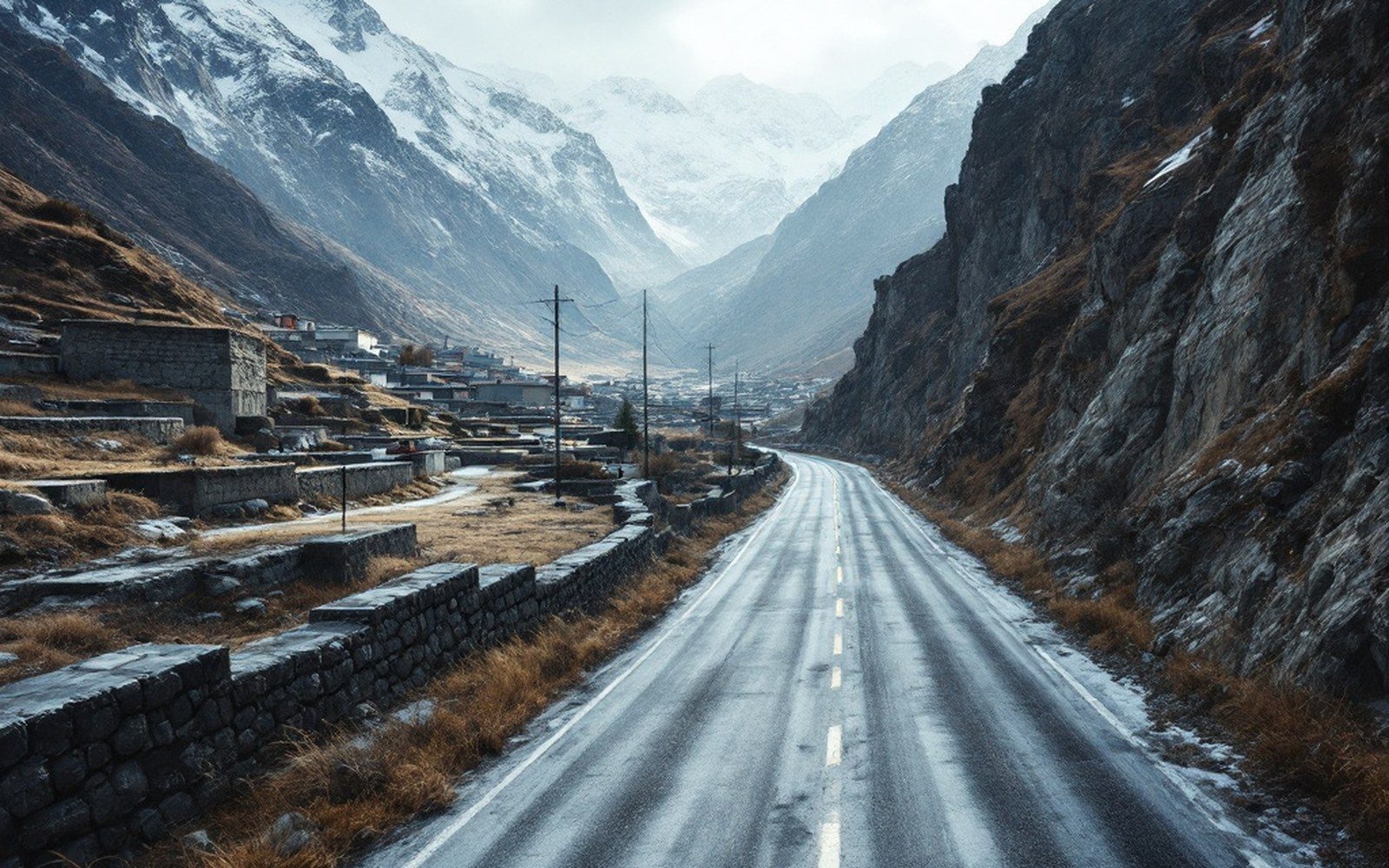
That valley is the Baksan. It runs from the glaciers of the high Caucasus down through a narrowing gorge, past the town of Tyrnyauz, past the Balkar villages, and out onto the plain to the west of Nalchik. The river gives the valley its character: fast, grey with glacial silt in summer, running hard even in the coldest months. The road follows the river for the entire ascent, and there is no other practical route to Elbrus. Every mountaineer, every skier, every researcher and every cable-car tourist who has stood on those upper slopes came up the Baksan. The valley is not just the approach to the mountain; it is the mountain’s only corridor to the world below.
What the republic contains
Kabardino-Balkaria is formally a republic of the Russian Federation, one of several such units in the North Caucasus — a status that carries its own parliament, its own presidency and a degree of administrative distinctiveness, though foreign and defence policy remain federal matters. In practice the republic is deeply integrated into the wider Russian economy and federal structures. Nalchik functions as a regional centre: government ministries, a university, a hospital system, and the infrastructure of a mid-sized Russian city with a population that was recorded at around 237,000 in the 2021 census.
The republic’s economy rests on several foundations, none of them individually large. Agriculture on the plain — sunflowers, maize, orchards — is old and established. The Tyrnyauz tungsten-molybdenum deposit in the Baksan valley was mined extensively during the Soviet period and made the town that grew beside it. Mountain tourism, always present but intermittently developed, drives whatever passes for a hospitality economy in the high valleys. Elbrus itself has hosted skiing infrastructure — gondolas, pistes, huts — for decades, servicing domestic Russian tourism above all, though the mountain also draws international climbers working the Seven Summits list.
The Balkars’ relationship with this territory carries a specific weight of history. In March 1944, the entire Balkar population was deported by Soviet order to Central Asia, accused collectively of collaboration with German forces during the wartime occupation. The Balkars were permitted to return only after 1957, following Stalin’s death and Khrushchev’s partial rehabilitation of the deported peoples. The place names in the high valleys, the villages, the grazing grounds — all of it had been administratively erased and partially resettled during the thirteen years of absence. What returned was a people rebuilding a connection to a landscape that had not waited for them. That history is inseparable from any reading of who the Balkars are and what the high valleys mean to them.
Elbrus and the question it answers
The question of where Europe ends and Asia begins has never had a single agreed answer. The boundary is not a river or a coastline but a convention that has shifted over centuries of European geographical thought. One common formulation runs the boundary along the crest of the Caucasus range, which places the southern slopes of Elbrus in Asia and the northern slopes — which descend through Kabardino-Balkaria — in Europe. Under that convention the summit belongs to Europe, and Elbrus claims the title of highest European peak over Mont Blanc’s 4,808 metres in the Alps.
Not everyone accepts this. Some geographers draw the Europe-Asia line along the Kuma–Manych depression to the north of the Caucasus, which would place the entire range in Asia and hand the European record back to Mont Blanc. The argument continues, genuinely unresolved, in academic geography departments. For the record, the Union Internationale des Associations d’Alpinisme, which governs the sport of mountaineering, treats Elbrus as the European high point for the purpose of the Seven Summits lists, which has made it practically the dominant convention for anyone actually climbing mountains.
For Kabardino-Balkaria the question is largely beside the point. Elbrus is there whether Europe claims it or not: a volcanic cone broad enough that its upper snowfields cover an area of roughly 145 square kilometres, home to the Garabashi and Pastukhov glaciers, and capable of generating its own violent weather systems with almost no warning. Climbers have died on it in summer in conditions that belonged to a different season. The Baksan valley below it carries the road, the river and the villages that have always lived in the mountain’s proximity — knowing its moods in the way that only long habitation teaches.
Spartak Nalchik played six seasons in the Russian Premier League from a city at the foot of these mountains. The republic that produced and funded the club is not incidentally dramatic geography; it is a place whose political history, its two peoples, its altitude and its isolation from the Russian industrial heartland all shaped what kind of football was possible here and what it meant when the team climbed.