The nineteenth century came here to take the waters
The spas of the Caucasian Mineral Waters introduced Russian culture to the mountains — and one writer fixed the image that has lasted.
Where the empire came to recover
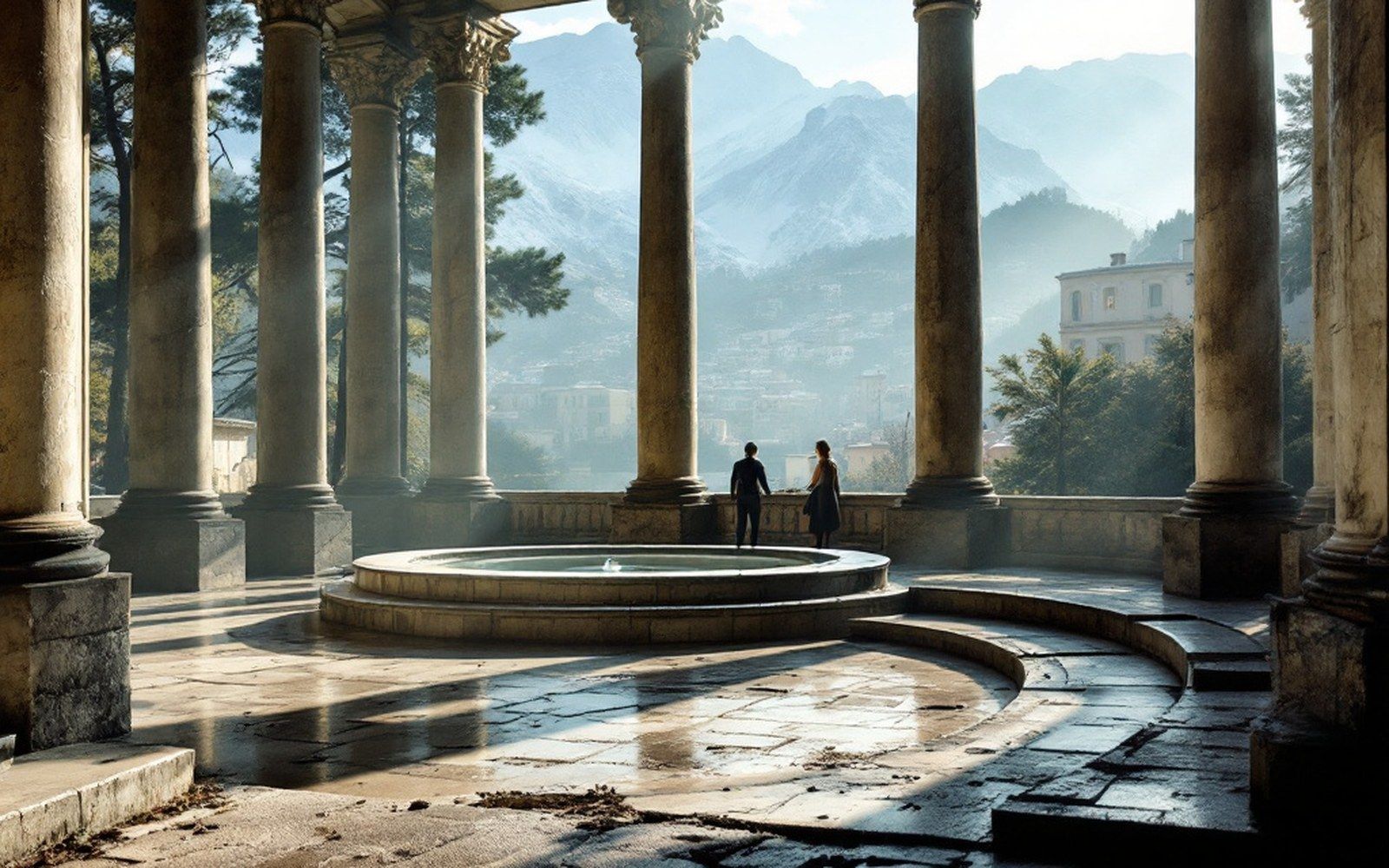
The foothills of the Caucasus range hold a geological accident that the Russian empire found irresistible: clusters of mineral springs rising through volcanic rock, warm enough to bathe in, varied enough to treat whatever ailment a physician might name. By the early nineteenth century the settlements around these springs — Pyatigorsk, Kislovodsk, Zheleznovodsk, Yessentuki — were developing into a resort circuit that drew the imperial aristocracy south every summer. They were not yet the formal spa towns they would become, but the infrastructure followed the fashionable trade: baths, colonnades, a promenade culture transplanted from the salons of St Petersburg into air thin enough to make you believe it was doing you good.
Pyatigorsk takes its name from Pyatigorye, the five-mountain area that rises immediately above the town. The dominant shape is Mashuk, a laccolith — a geological dome pushed up by magma that never broke the surface — and the springs emerge from its flanks at different temperatures and mineral concentrations. Russian military and administrative staff posted to the turbulent Caucasus frontier used Pyatigorsk as a staging point and a place to recuperate. Society followed the military, as it tended to do at the edges of empire, and for several decades the town held a peculiar double character: elegant visitors taking cures on one side of the promenade, the logistics of an active frontier war pressing in from every other direction.
Lermontov's Caucasus
Mikhail Lermontov arrived in this context more than once, first as a child brought south for his health, later as an officer whose literary reputation had preceded his military postings. He was exiled to the Caucasus twice, the second time after a duel in St Petersburg, and it was in these years that he absorbed the landscape and the social theatre of the mineral-water towns thoroughly enough to build a novel from them. A Hero of Our Time, published in 1840, is the document that fixed the Caucasus in the Russian cultural imagination: not the official Caucasus of military dispatches and administrative reports, but a landscape charged with boredom, desire and the particular glamour of danger kept at one remove.
The novel’s Pechorin moves through settings that are clearly Pyatigorsk and Kislovodsk — the springs, the boulevard, the society of bored officers and visiting women — while the mountains press in at the edges of each scene, carrying the Circassian and Chechen populations that the empire was simultaneously fighting and romanticising. Lermontov does not sentimentalise either side. His mountains are genuinely beautiful and genuinely indifferent; his European characters project onto them whatever mood their own disillusionment requires. That tension is what made the novel modern in 1840 and what keeps it usable as a reading companion today.
Lermontov was killed in a duel on the slopes of Mashuk in July 1841, at twenty-six. The spot is marked, and the house in Pyatigorsk where he spent his last weeks is now a museum. The duel, like the novel, was conducted with a kind of studied carelessness that made it feel, to those who witnessed it, entirely in character. Whether or not the life completed the literature is a question for biographers; what is clear is that the death in that particular place sealed the identification between the writer and the landscape. Pyatigorsk acquired a literary gravity it has never quite lost.
What the image carries
The Caucasian Mineral Waters circuit still functions as a resort region, and visitors still arrive at Pyatigorsk looking for something that Lermontov’s prose has already named for them. That is a modest kind of cultural power but a durable one. The Kabardino-Balkarian republic lies immediately to the south and east, and the mountains that backdrop Pyatigorsk extend into Nalchik’s own territory — the same range, the same light, the same seasonal pattern of snow on the upper slopes. What the mineral-water towns did was give that landscape a literary address, somewhere a reader of Russian could locate themselves before they had seen any of it. The image the nineteenth century assembled here still shapes what people expect to find when they turn south.
Reference
The material below is drawn from the same sources as the piece above, set out as a summary rather than as prose.